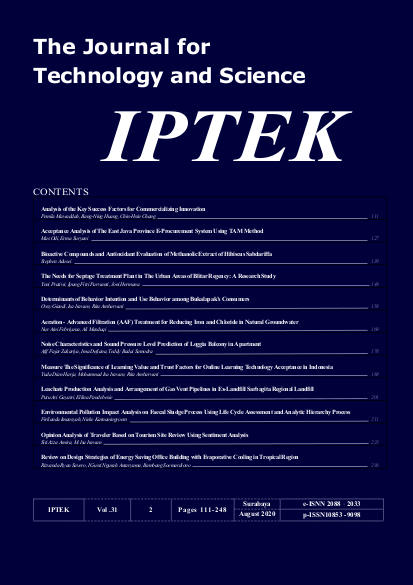
Analysis of the Key Success Factors for Commercializing Innovation
Article Sidebar
Published:
Jul 1, 2025
Keywords:
Author Guidelines, Literature Study, Original Research, Template
Main Article Content
Abstract
The development and commercialization of new technologies have inherent uncertainties and associated risks. Many researches conducted by Indonesian R&Ds never reached the diffusion stage, i.e., the commercialization process. Therefore, Indonesia needs a strategy to translate promising technologies into a stream of economic returns for its stakeholders. This study analyzes the critical success factors (KSF) for commercializing innovation. It used new product development literature and TOE (technology–organization– environment) framework and developed a research model to investigate the determinants of commercialization of innovation. In choosing the selected vital success factors, a hierarchy of KSFs was defined. It also used the Analytic hierarchy process to help experts rank the importance of identified KSFs. The KSF hierarchy is constructed with two levels: a critical comprising three dimensions and a detailed level of nine individual factors. The result shows that the experts believe that in the top-level, technology is the most critical dimension followed by environment and organization. Technology is the primary consideration for the company before launching their product to the market. Market demand has the highest rank from the environmental dimension. Lastly, experts suggest that the organization network is the most significant to grasp investors and potential markets for successful commercialization.
Article Details
How to Cite
Mawaddah, P., Huang, B.-N., & Chang, C.-H. (2025). Analysis of the Key Success Factors for Commercializing Innovation. IPTEK The Journal for Technology and Science, 31(2), 111–126. https://doi.org/10.12962/j20882033.v31i2.4221
Issue
Section
Articles